Shopify Referral Traffic: What It Is and How to Generate More Sales
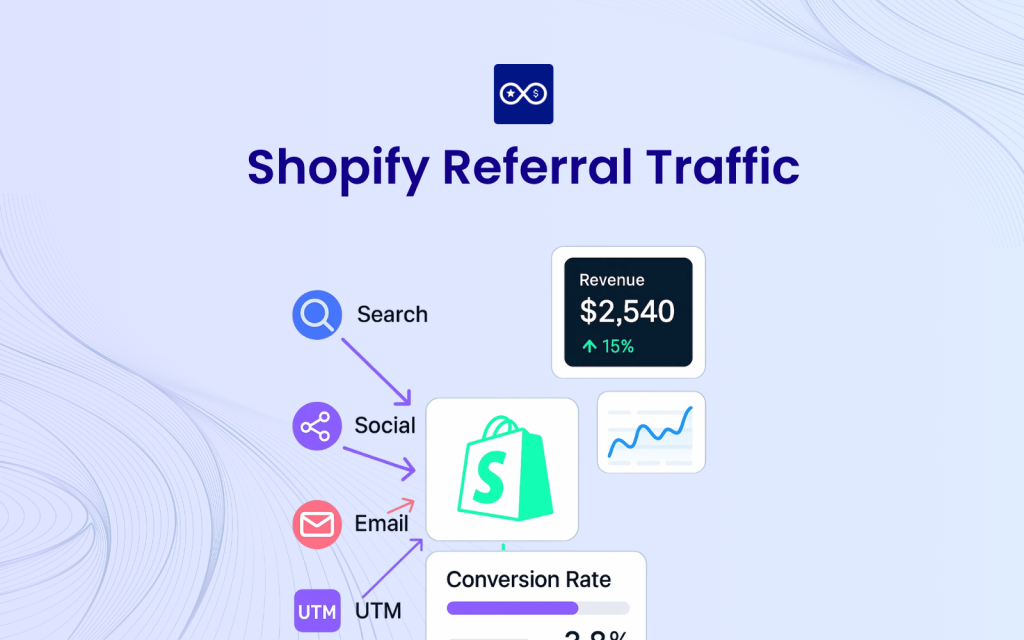
Referral traffic is website traffic that arrives through links on other sites—like a blog post, social media mention, or email a customer forwards—rather than from search engines or direct URL entry. It matters because these external links act as third-party endorsements that build trust and bring in higher-quality visitors who are more likely to buy.
Most Shopify store owners overlook referral traffic or assume it happens by accident, but you can actively generate and scale it through strategic referral and affiliate programs. This guide walks you through what referral traffic is, why it drives profitable growth, when to prioritize it, and exactly how to set up and optimize a referral program that turns your customers into your most effective marketing channel.
Understanding Referral Traffic in Shopify
Referral traffic is website traffic that comes from a link on another site—like a blog post, social media mention, or email a customer forwards to a friend—rather than from a search engine or someone typing your URL directly. It matters because other people and platforms are essentially endorsing your products, which builds trust and often brings in higher-quality leads who are more likely to buy. Unlike direct traffic (where visitors type your URL or use a bookmark) or organic search (where people find you through Google), referral traffic arrives through external links that act as third-party validation of your store.
Where to Find Referral Data in Shopify Analytics
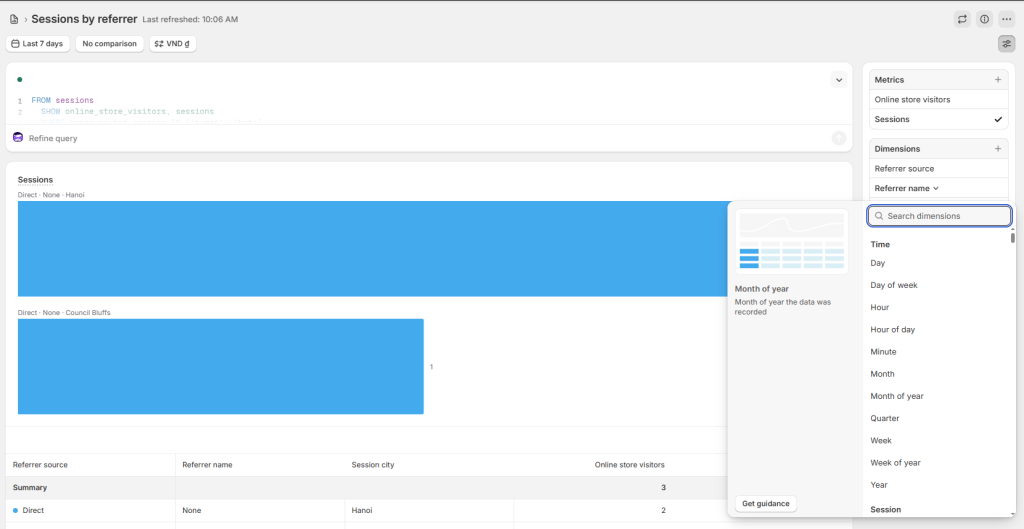
Navigate to Analytics > Reports > Sessions by referrer in your Shopify admin. Here, you can see metrics like sessions (how many visits came from each source). Shopify’s built-in referral report does not automatically track conversion rate, average order value, or revenue attributed to each referrer. To measure these metrics accurately, you can integrate Google Analytics, use UTM links, or leverage referral program apps like Bloop. With apps like Bloop, these metrics are tracked fully, allowing you to evaluate the true performance of your referral sources and identify which partners or campaigns drive the most valuable traffic.
Referral vs Affiliate vs Direct Traffic
Here’s how these three traffic types differ:
| Traffic Type | Source | Key Characteristics | Cost Structure |
| Referral | Customer shares organically | Higher trust, typically lower cost, driven by genuine recommendations | Usually free or reward-based |
| Affiliate | Partner promotes for commission | Structured partnerships, scalable, requires program management | Performance-based commission |
| Direct | Visitor types URL or uses bookmark | Often returning or brand-aware visitors, no identifiable link source | No acquisition cost |
Referral traffic tends to convert better than cold paid ads because the visitor already heard about you from someone they trust. Affiliate traffic scales more predictably since you’re working with partners who have established audiences, though it requires more formal agreements and tracking.
Why Referral Traffic Drives Profitable Growth
Referrals benefit from the trust of word-of-mouth recommendations, which means people who arrive via a referral link are often more interested and ready to buy because someone they know vouched for you. This pre-qualification reduces the perceived risk of trying a new brand, leading to higher conversion rates and stronger customer loyalty compared to visitors from paid ads or cold organic search.
Lower Customer Acquisition Cost
Referrals dramatically reduce or eliminate paid advertising costs, lowering your customer acquisition cost in a few key ways:
- No bidding wars: You’re not competing in Facebook or Google auctions where costs keep rising.
- Pay for performance: You only pay when a referred customer actually makes a purchase, not for impressions or clicks that might not convert.
- Natural scaling: The system grows through your existing customer base without requiring proportional increases in ad spend.
This makes growth more sustainable as your store matures, since each new customer can potentially bring in more customers without additional marketing dollars.
Higher Lifetime Value From Trusted Buyers
Referred customers arrive pre-qualified by a trusted recommendation, which increases their likelihood of making repeat purchases, staying loyal longer, and spending more per order over time. They start with a positive impression and a lower barrier to trust, making them more receptive to your marketing and more forgiving of occasional hiccups. Each referral doesn’t just bring one sale—it often brings a customer relationship that pays dividends for months or years.
>> You may also like: Why referral programs work?
When to Prioritise Referral Over Other Channels
You’ll get the best results from referral marketing when your product experience is already strong and customers are organically sharing or recommending your store without prompting. Suppose you’re still figuring out product-market fit or struggling with fulfillment and customer service. In that case, it makes sense to balance referral efforts with other channels like paid ads or SEO that can bring awareness while you refine operations.
Signs You Are Ready for a Referral Program
Look for these indicators that your store is primed for a referral program:
- Happy customers leaving positive reviews: If your reviews consistently receive 4+ stars and customers praise specific products or experiences, they’re likely to recommend you.
- Organic word-of-mouth already happening: You’re seeing customers mention your brand on social media, tag friends in comments, or ask about referral options unprompted.
- Stable product-market fit and clear value proposition: Your target audience understands what you sell, why it’s valuable, and how it’s different from competitors.
When these signals align, a referral program amplifies what’s already working rather than trying to manufacture enthusiasm from scratch.
Red Flags That Mean Hold Off
Wait to launch a referral program if you’re experiencing any of these issues:
- High return or refund rates: If customers are frequently unhappy with purchases, asking them to refer friends will backfire and damage trust.
- Poor customer service or slow support: Long response times or unresolved complaints create negative experiences that people won’t want to share.
- Inconsistent product quality: Variability in what customers receive makes it risky to recommend your store, since their friend might have a different experience.
- Very small or nonexistent customer base: You need at least some satisfied customers to refer others; if you’re just starting out, focus on acquisition and retention first.
Step-By-Step Setup of a Shopify Referral Program
Setting up a referral program doesn’t have to be complicated or time-consuming. A simple process lets you launch quickly, measure results, and improve over time without getting bogged down in technical details.
1. Choose Your Goal and KPI
Start by deciding what you want your referral program to achieve—whether that’s acquiring new customers, driving repeat purchases from existing ones, or building brand awareness in a new market. Your goal determines which metrics you’ll track most closely: referred sessions and conversion rate if you’re focused on acquisition, revenue per referral if you’re optimizing for profitability, number of active advocates if you’re building community, or cost per referral if you’re comparing efficiency to paid channels. Pick 2-3 key performance indicators that align with your primary goal so you can quickly assess what’s working.
2. Select Rewards and Rules
Choose rewards that motivate sharing without eroding your margins, and define clear eligibility and redemption rules so customers know exactly what they’ll get. Popular options include:
- Percentage discounts: Like 10% off for both the advocate and their friend
- Fixed-value credits: Such as $10 store credit for the advocate after the friend’s first purchase
- Tiered rewards: Increasing benefits as advocates refer more people
- Non-discount perks: Like early access to new products, free thank you gifts, or complimentary shipping
The best reward structure depends on your average order value and margin—higher-margin products can afford generous percentage discounts, while lower-margin items work better with fixed credits or non-monetary perks.
>> You may also like: 12+ Referral Incentives Ideas With Real-world Examples
3. Install a Referral App
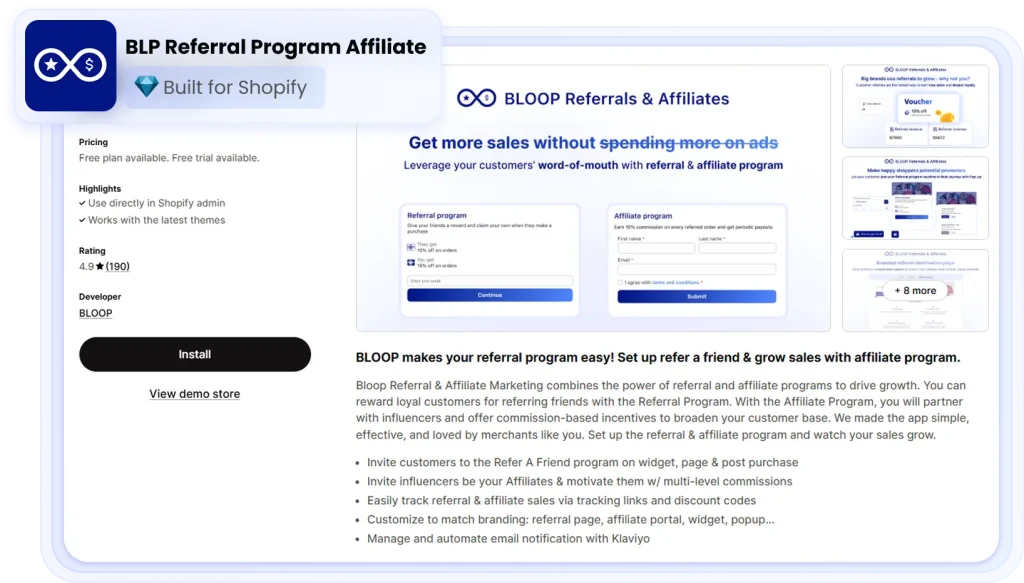
Head to the Shopify App Store and install a referral app that fits your budget and feature needs. Look for capabilities like automatic referral link generation (so each customer gets a unique trackable URL), customizable rewards and messaging, fraud detection to prevent abuse, UTM parameter support for attribution, coupon code integration, email and SMS triggers for automated outreach, and an analytics dashboard to monitor performance. Bloop offers all these features with a beginner-friendly interface and affordable pricing, making it easy to launch your first program without technical complexity.
4. Launch Referral Touchpoints
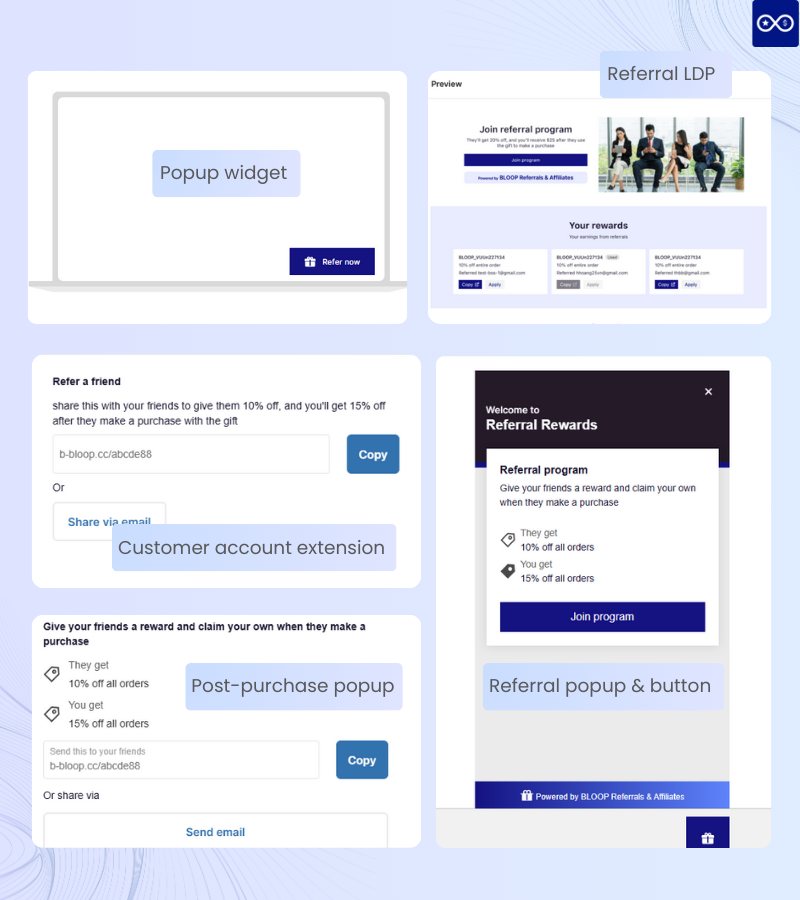
Add referral prompts at high-engagement moments when customers are most likely to share, starting with thank-you page widgets right after checkout when satisfaction is at its peak. Include referral options in order confirmation emails, follow-up sequences a few days after delivery, and review request emails after customers have had time to experience your product. Make sharing frictionless by including social share buttons for platforms like Instagram, Facebook, and WhatsApp, along with pre-written captions or messages that customers can customize. Always highlight the friend-facing benefit prominently—people are more likely to share when they know their friend will get something valuable too.
5. Test and Iterate
Start with a simple version of your program, gather feedback from early participants, and optimize based on what you learn. You might discover that customers respond better to higher advocate rewards, that certain messaging resonates more than others, that timing matters (post-delivery vs. post-review), or that specific customer segments refer more actively. Small tweaks to rewards, copy, placement, or targeting can significantly improve participation and conversion rates over time.
>> Explore: How to promote your referral program?
Reward Structures That Protect Your Margins
Selecting sustainable rewards means modeling the costs under realistic redemption and referral rates to make sure you’re profitable even when the program succeeds. The goal is to motivate sharing without giving away so much margin that referred customers become unprofitable.
Percentage Discounts
Percentage discounts are simple and appealing because they scale with order size—a 10% discount feels more valuable on a $200 order than a $50 one. However, they carry margin risk on high-value orders, since a 15% discount on a $500 purchase costs you $75 in foregone revenue. To protect margins while keeping the offer attractive:
- Cap the maximum discount amount: Like “15% off, up to $50”
- Apply minimum order thresholds: So the discount only activates above a certain cart value
- Offer different percentages: Such as 20% for the advocate, 10% for the friend
Fixed-Value Credits
Fixed-value credits work well for lower-margin items because you know exactly what each referral will cost regardless of order size. Examples include $10 store credit for the advocate after their friend completes a first purchase, $5 off for the friend’s first order to lower the barrier to trying your store, or a gift-with-purchase instead of a discount (like a free sample or accessory) to maintain perceived value without cutting into revenue. Fixed credits are easier to budget and forecast, making them ideal for stores with tight margins or high average order values where percentage discounts could get expensive.
Tiered or VIP Rewards
Tiered rewards incentivize advocates to refer multiple people by offering increasing benefits as they hit milestones. Here’s an example structure:
| Tier | Referrals | Advocate Reward | Additional Perks |
| Bronze | 1-2 | $10 store credit each | — |
| Silver | 3-5 | $25 store credit each | Early sale access |
| Gold | 6-10 | $60 store credit each | Free shipping for life |
| Platinum | 11+ | $100+ store credit each | Exclusive products, VIP support |
This approach turns your most enthusiastic customers into brand ambassadors who actively promote your store because they’re working toward meaningful rewards.
Promotion Tactics to Boost Shares and Sales
Even the best referral program won’t drive results if customers don’t know about it or find it hard to use. Multiple touchpoints and clear friend-facing benefits maximize participation and conversions.
Post-Purchase Thank-You Page Widgets
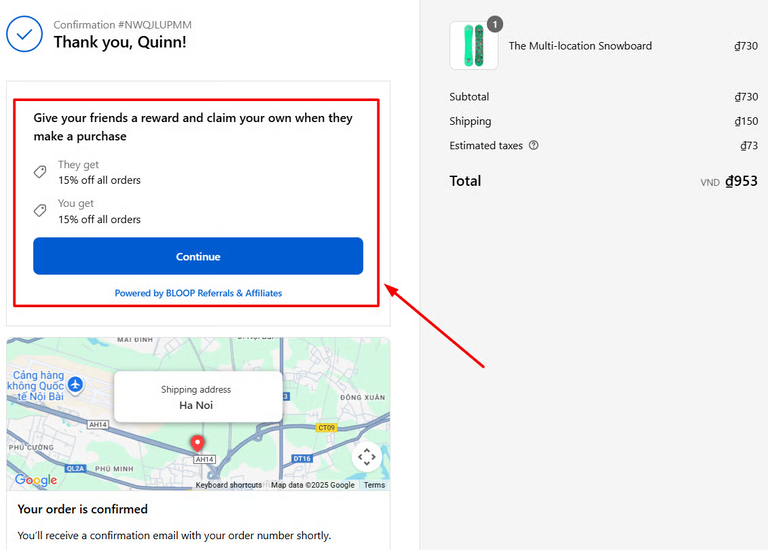
Place referral widgets immediately after purchase on the thank-you page, when satisfaction and engagement are at their highest. Highlight the friend’s offer prominently (like “Give your friends $10 off their first order”), show the advocate’s unique referral link with a one-click copy button, and use a short, celebratory message that feels like a natural extension of the purchase experience. This placement captures customers in a positive moment before they navigate away, increasing the likelihood they’ll share.
Automated Referral Emails
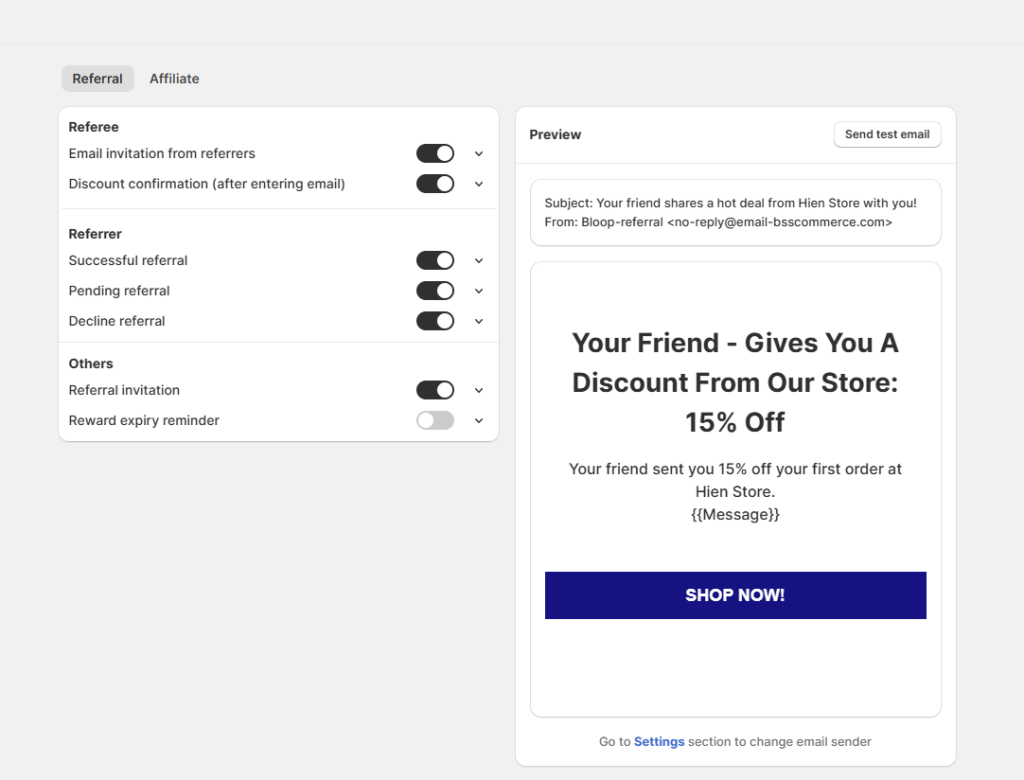
Send follow-up emails with referral links timed strategically after delivery and a positive product experience:
- Delivery confirmation email: Include a subtle referral CTA at the bottom
- Review request email: Mention the referral program alongside the review ask
- Post-review thank you: Offer an enhanced reward for advocates who’ve already demonstrated satisfaction
Automation ensures every customer gets prompted at the right moment without manual effort, and you can A/B test subject lines, messaging, and timing to optimize performance.
Social Share Incentives
Provide pre-written captions and one-click sharing buttons for Instagram, Facebook, X, WhatsApp, and email to reduce friction and improve share rates. Customers are more likely to share when you make it effortless—draft a few caption options they can customize, include eye-catching visuals or product photos they can post, and make sure the referral link is automatically embedded in whatever they share.
Tracking, Attribution, and Fraud Prevention
Accurate attribution ensures you’re rewarding the right people and understanding which sources drive the most value, while fraud prevention protects your program from abuse that could drain margins without generating real growth.
UTM Links and Coupon Codes
Use UTM parameters on referral links to identify the source in your analytics, and pair them with unique coupon codes for additional tracking redundancy. A standard UTM structure might look like ?utm_source=referral&utm_medium=customer&utm_campaign=referral_program&utm_content=advocate_id, which lets you see referred traffic in Google Analytics and Shopify’s acquisition reports. Unique coupon codes (like SARAH10 for advocate Sarah) provide a backup attribution method if cookies are cleared or customers switch devices.
Detecting Self-Referrals and Abuse
Monitor for common fraud patterns that indicate someone is gaming your program rather than genuinely referring new customers:
- Same device or IP address: Used for both the advocate and the “friend”
- Identical or similar shipping addresses: Like the same address with a slightly different name
- Multiple new accounts using the same payment method: A clear red flag for abuse
- Rapid referral bursts from a single user: That don’t match normal sharing behavior
Most referral apps, including Bloop, offer built-in fraud detection that flags suspicious activity for manual review, letting you block rewards before they’re redeemed.
Start Generating Referral Sales With Bloop
Bloop offers a simple, affordable way to launch, manage, and scale referral programs on Shopify without technical complexity or high costs. The platform combines referral and affiliate management in a single dashboard, with built-in tracking, fraud controls, and automated touchpoints.
Use Bloop’s beginner-friendly setup to create customizable rewards, generate unique referral links for each advocate, add thank-you page widgets and email triggers, and start tracking performance—all without needing developers or technical skills. The dashboard shows real-time metrics like referred CTR, conversion rates, and revenue, so you can see what’s working and adjust your strategy on the fly.
Install Bloop from the Shopify App Store and start with a free trial or plan that fits your budget. You’ll be up and running in minutes, with access to all the features you need to turn your customers into advocates and drive profitable referral traffic.
Frequently Asked Questions About Shopify Referral Traffic
How long does it take to see referral traffic after launching a Shopify referral program?
Most stores see initial referral activity within the first few weeks as early adopters start sharing, with meaningful traffic building over the first few months as more customers discover the program and word-of-mouth gains momentum. The timeline depends on how actively you promote the program, how large your existing customer base is, and how compelling your rewards are.
Can referral links and discount codes be used together on Shopify?
Yes, most referral apps allow customers to stack referral rewards with existing discount codes, though you can configure rules to prevent this if needed for margin protection. For example, you might allow stacking on full-price items but block it during sales, or set a maximum total discount percentage.
Do referral programs hurt my Shopify brand if I already run frequent discounts?
Referral programs actually strengthen brand perception by rewarding loyal customers for advocacy rather than offering blanket discounts to everyone. The key difference is that referral rewards feel earned and exclusive, whereas constant site-wide sales can train customers to wait for deals.
What happens to Shopify referral tracking if a customer clears cookies or switches devices?
Modern referral apps use multiple tracking methods including email matching, account linking, and unique coupon codes to maintain attribution even when cookies are cleared or devices change. Bloop employs redundant tracking mechanisms to ensure advocates get credit for their referrals regardless of technical hiccups.

Hien Tran
Hien Tran is a Product Marketing specialist at Bloop, where she translates product features into growth-driven solutions for Shopify merchants. By combining market insights with clear messaging, Hien ensures that store owners not only understand Bloop’s value but also know how to apply it to boost revenue, loyalty, and customer acquisition.