22 Referral Gifts Ideas That Actually Convert Shopify Customers

Looking for referral thank you gift ideas that actually get your Shopify customers to share your store with their friends? The right gift makes all the difference between a program that fizzles out and one that drives consistent, profitable sales.
Most store owners throw generic discounts at referrals and wonder why nobody participates. The truth is, effective referral gifts balance what excites your customers with what your margins can sustain—and there are 22+ proven options beyond basic percentage-off coupons. This guide walks you through choosing, setting up, and tracking referral rewards that convert browsers into buyers and turn happy customers into your best salespeople.
>> You may also like:
- 7 Best Gift Card Referral Program Templates You Can Copy 2026
- 12+ Referral Incentives Ideas With Real-world Examples
- Referral Commission For Shopify Stores: Complete Guide 2026
What Makes A Referral Gift Convert Buyers?
Referral gifts are rewards you give to customers who successfully bring new buyers to your store. The most effective ones tap into real motivation—they feel genuinely valuable to the person sharing while staying cost-effective for you. Store credits keep customers coming back, exclusive early access makes people feel like VIPs, and free shipping removes one of the biggest purchase barriers online shoppers face.
The trick is matching rewards to what your customers actually care about and what your business can afford. A luxury skincare brand might hand out premium product samples, while a budget-friendly fashion store could lean into percentage discounts that push people toward bigger carts. Double-sided rewards, where both the referrer and their friend get something, tend to work better because everyone walks away winning.
How To Choose Rewards That Fit Your Margins
Your core business numbers tell you exactly how much you can spend on referral rewards without losing money.
Step 1: Understand CAC And CLV
Customer Acquisition Cost (CAC) is what you spend to bring in a new customer through paid ads or other marketing. Customer Lifetime Value (CLV) is the total profit you expect from a customer over time, factoring in all their future purchases. Keep your referral gift costs well below your CAC—ideally around 30-50% lower—so each referral stays more profitable than buying ads.
Step 2: Segment Customers By AOV
Group your customers by Average Order Value (AOV) to create tiered rewards that match how much different people typically spend. Customers who regularly drop $150+ can justify stronger incentives like $25 store credit or free expedited shipping. Meanwhile, folks with smaller carts might get 10% off or free standard shipping, keeping your costs proportional to what they bring in.
Step 3: Align Gift Cost To Profit Window
Calculate the maximum you can spend on a referral reward based on your gross margin per order and what you expect from repeat purchases. If your average order has a 60% gross margin—say $30 profit on a $50 sale—you can afford to spend around $15-20 on a referral reward while still covering fulfillment and keeping things profitable. Your reward fits inside the profit window left after discounts, shipping, and operational costs.
22 Referral Gift Ideas That Drive Repeat Sales
Here are proven referral rewards with guidance on when each one works best.
1. Cash Back Credits
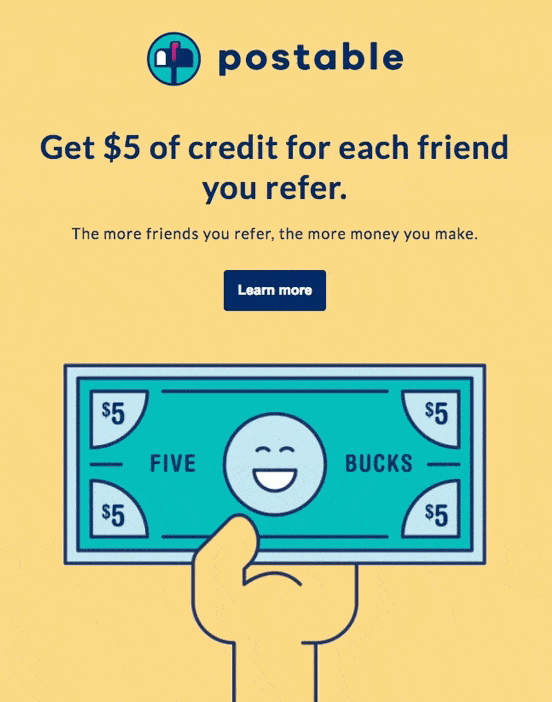
Store credit for future purchases builds loyalty and guarantees people come back to shop again. Unlike cash payouts that send customers elsewhere, credits keep them engaged with your brand and often lead to bigger carts when they redeem. Set expiration dates around 60-90 days to create urgency without feeling pushy.
2. Percentage Discounts
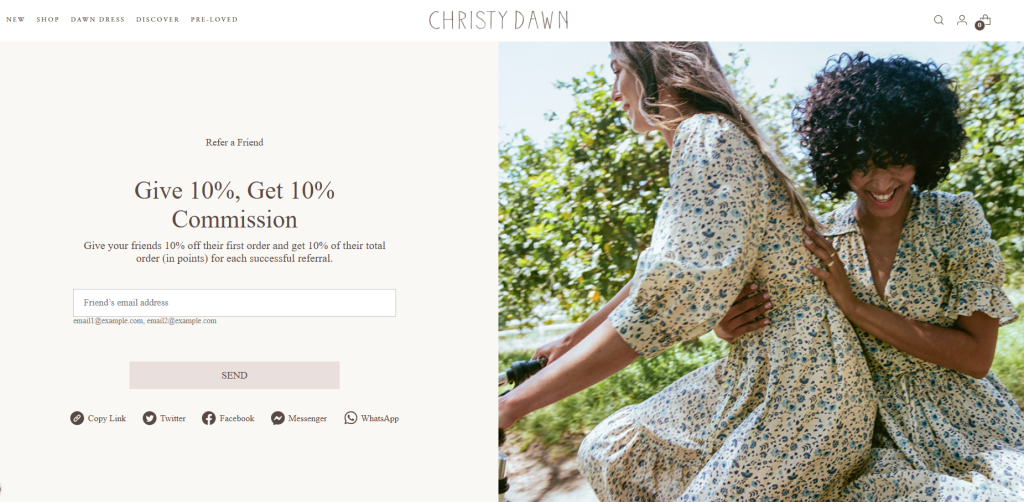
A percentage off the next purchase works well for higher-ticket items because it nudges customers toward larger carts without locking you into a flat cost. Offering 15-20% off gives flexibility—someone spending $100 gets $15-20 off, while a $200 order gets $30-40 off—so your reward scales naturally with purchase size.
3. Gift Cards
Prepaid store gift cards are simple to track and appeal to people who want to give their friends the freedom to choose. They work especially well during holidays when everyone’s already thinking about gifts. Digital gift cards cut out shipping costs and arrive instantly via email.

4. Free Shipping Upgrades
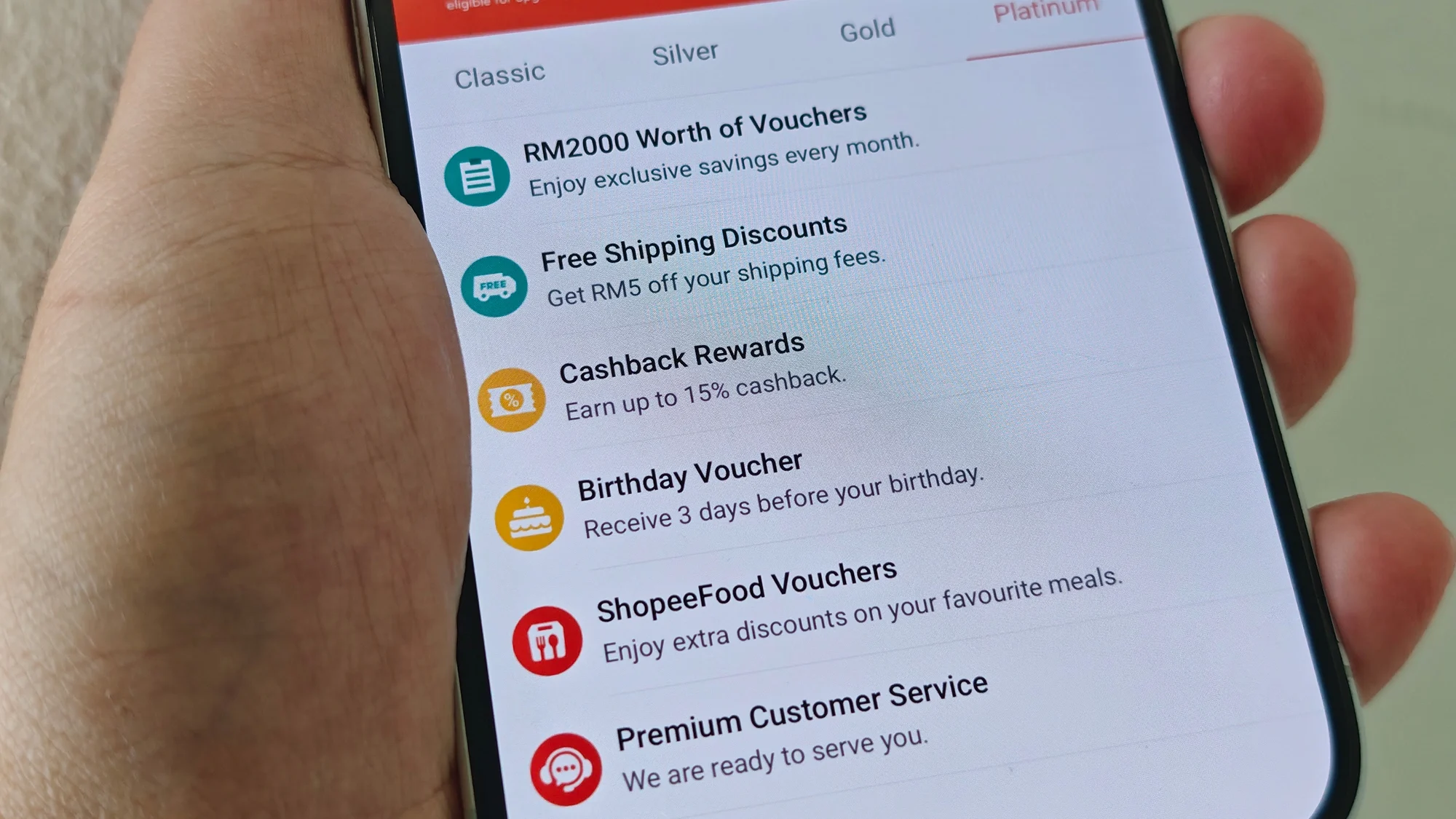
Expedited shipping at no cost feels premium and hits hard for heavy or bulky items where shipping costs pile up. Customers who normally choose standard 5-7 day shipping appreciate getting 2-day delivery, and your extra cost is often just $3-8 per order. This works particularly well for furniture, fitness equipment, or baby products where faster delivery solves a real problem.
5. Limited-Edition Merch
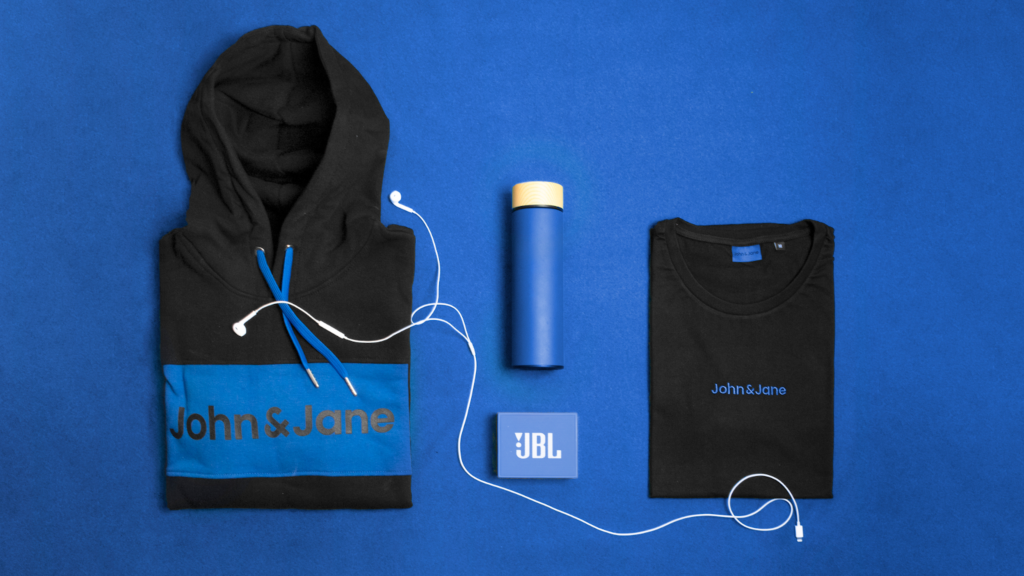
Exclusive branded products available only through referrals create scarcity and turn customers into walking advertisements. Think custom totes, water bottles, or apparel with unique designs you can’t buy anywhere—the exclusivity makes them feel earned. This approach works best when you already have strong visual branding and customers who love showing off their connection to your store.
6. BOGO Coupons
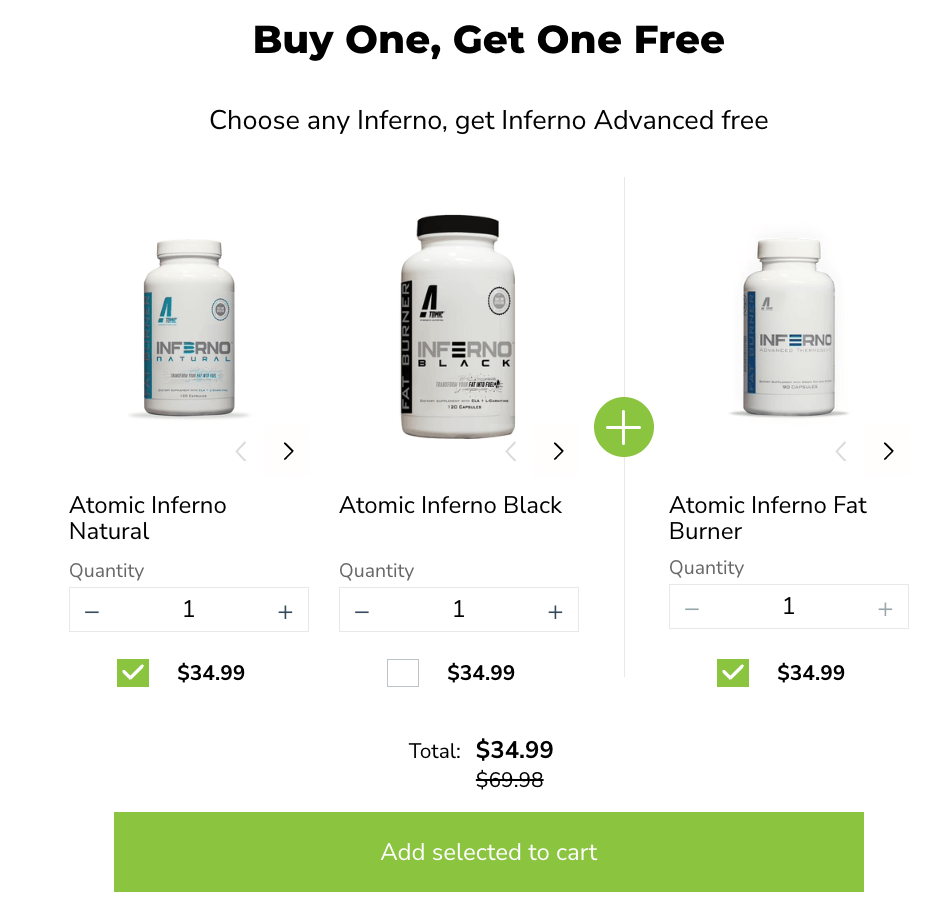
Buy one, get one free offers communicate savings clearly and often bump up order value by encouraging add-on purchases. People perceive BOGO as a 50% discount, which feels more generous than a straight percentage off even when the math is identical. Use this for products with healthy margins or to move inventory that pairs well together.
7. Tiered Store Credit
Escalating rewards for multiple successful referrals gamify the experience and keep people participating over time. For example, $10 credit for the first referral, $15 for the second, and $25 for the third creates momentum. This structure works beautifully for subscription boxes or consumable products where customers have large networks to tap into.
8. Exclusive Early Access
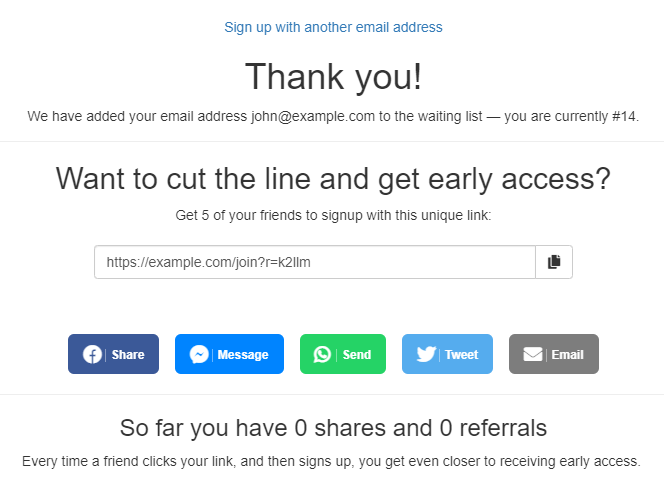
First access to new products or sales costs you nothing and feels incredibly valuable to engaged customers watching your launches. Fashion and tech brands especially benefit since their audiences crave being first to discover and share new releases. Promote early access windows 24-48 hours before public launch to create genuine exclusivity.
9. Loyalty Points Boosters
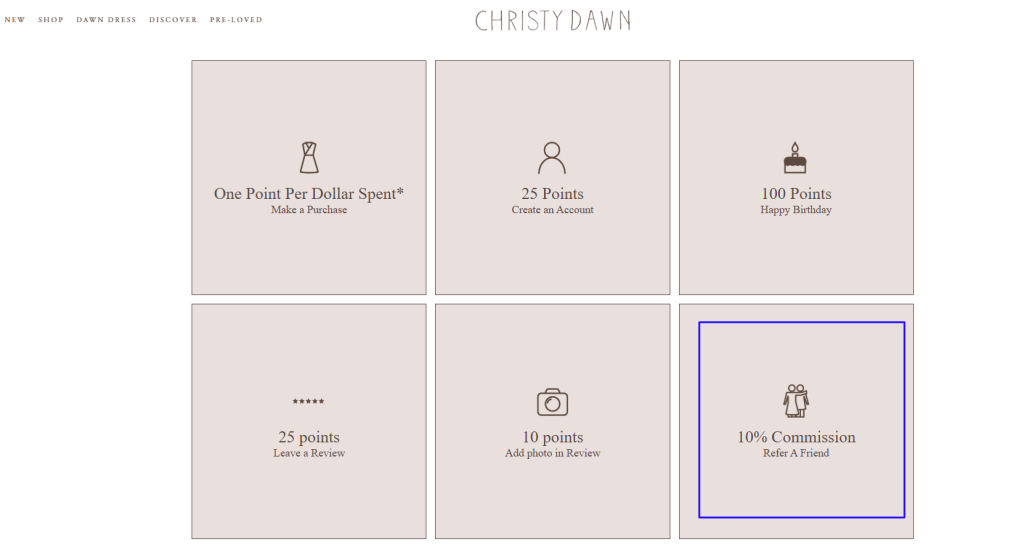
Bonus loyalty points leverage your existing rewards program without requiring new fulfillment processes. If you already run a points system where 100 points equals $1, offer 500-1000 bonus points for successful referrals that stack with regular earning. This works seamlessly with apps like Bloop that integrate with loyalty platforms.
10. Mystery Boxes
Surprise product bundles create excitement, help move excess inventory, and introduce customers to items they might not discover otherwise. Curate boxes with 3-5 products worth $40-60 that cost you $15-20 to fulfill, mixing bestsellers with slower-moving stock. The element of surprise generates social sharing as people unbox and post about their finds.

11. Digital Downloads
Ebooks, guides, or digital products carry almost zero fulfillment cost while offering high perceived value. A fitness brand might offer a 30-day workout plan, while a home goods store could provide interior design guides or recipe collections. Create once and distribute infinitely.
12. Subscription Days Free
Extended trials or free months for subscription services increase retention and long-term value. Offering an extra month free for every two referrals encourages sustained participation and deepens the referrer’s own commitment. This works particularly well for coffee subscriptions, meal kits, or beauty boxes where the incremental cost is low but perceived value is high.
13. Charity Donations
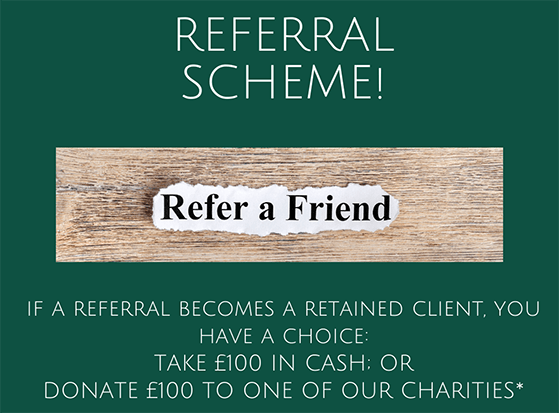
Donations in the customer’s name appeal to socially conscious buyers and reinforce brand values without requiring tangible rewards. Partner with 2-3 aligned nonprofits and let referrers choose where their $5-10 donation goes. This resonates strongly with younger shoppers who prioritize brands with social missions.
14. Carbon Offset Credits
Environmental impact credits attract eco-conscious customers and can be delivered at relatively low cost through partnerships with carbon offset organizations. For every successful referral, offset 50-100 pounds of CO2 emissions and provide a certificate customers can share on social media. Outdoor, wellness, and sustainable fashion brands find this particularly effective.
15. VIP Community Access
Private groups or forums for top customers foster community and deepen engagement. Create a Facebook Group, Discord server, or Circle community where referrers get exclusive content, first dibs on sales, and direct access to your team. The ongoing value of community often outweighs one-time discounts for people seeking connection.
16. Referral Leaderboard Prizes
Monthly rewards for top referrers create competition and sustained program momentum. Display a public leaderboard showing top 10 referrers by first name or username and offer prizes like $100 store credit or free products to winners. This works exceptionally well when promoted in email newsletters and social channels.
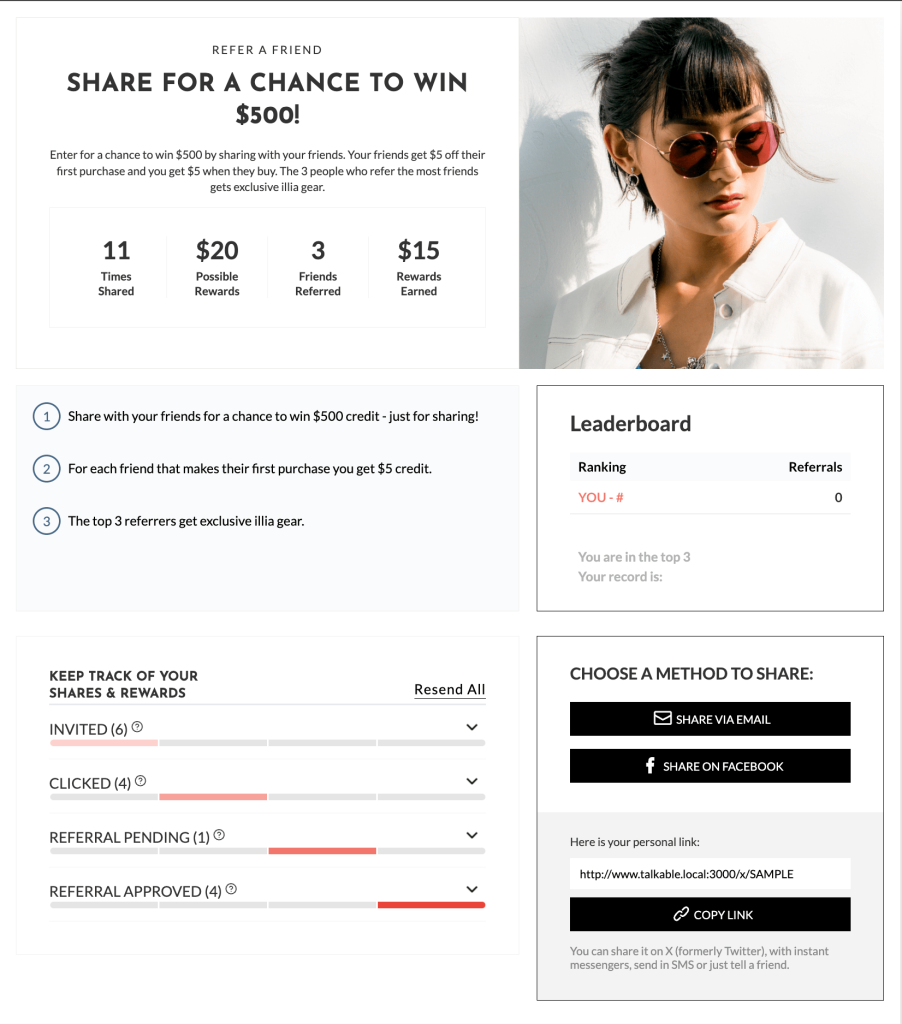
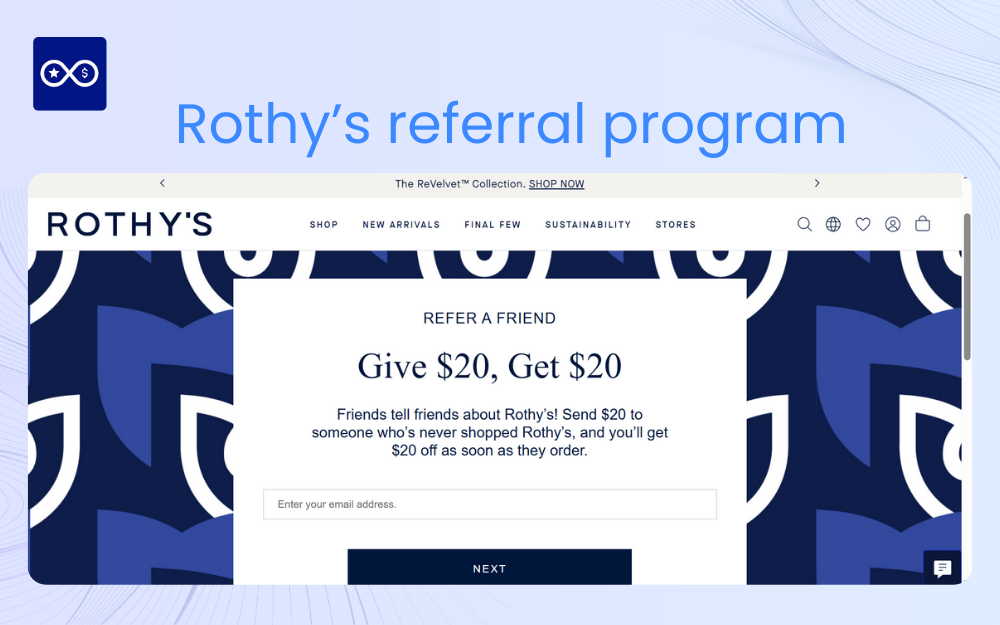
17. Double-Sided Discounts
Offering benefits to both the referrer and the new customer increases conversion rates by aligning incentives on both sides. The classic “$20 for you, $20 for your friend” structure removes friction since the new customer doesn’t feel like they’re just helping someone else earn rewards.
18. Seasonal Bundles
Holiday- or season-themed bundles feel timely and help you move specific inventory aligned with shopping patterns. Create “Summer Essentials” or “Holiday Gift Sets” worth $50-75 that cost you $20-30 to assemble. These work particularly well 4-6 weeks before major holidays when customers are already in a gifting mindset.
19. Social Media Shoutouts
Public recognition on your brand’s channels costs nothing and boosts customer pride while expanding brand visibility. Feature top referrers in Instagram Stories, Facebook posts, or TikTok videos, celebrating their impact. This non-monetary reward works surprisingly well for customers who value social recognition.
20. Product Samples
Free samples of new or premium products drive discovery at low cost and can upsell higher-margin items. Send deluxe samples or trial sizes of products with strong margins, introducing referrers to premium lines they might purchase full-size later. Beauty, wellness, and food brands see particularly strong results here.
21. Beta Tester Spots
Early access to test products makes customers feel special while giving you valuable pre-launch feedback. Invite successful referrers to try new products 30-60 days before launch, gathering testimonials and user-generated content simultaneously. This creates a win-win where customers feel like insiders and you gain authentic marketing assets.
22. Wholesale Pricing Passes
Temporary access to wholesale or bulk pricing delivers high perceived value while letting you control eligibility and duration. Offer 30-40% off for 48 hours after a successful referral, creating urgency. This works best for consumable products or items customers regularly repurchase in quantity.
Step-By-Step Setup In Shopify Without Coding
You can implement referrals even if you’ve never touched code or run a referral program before.
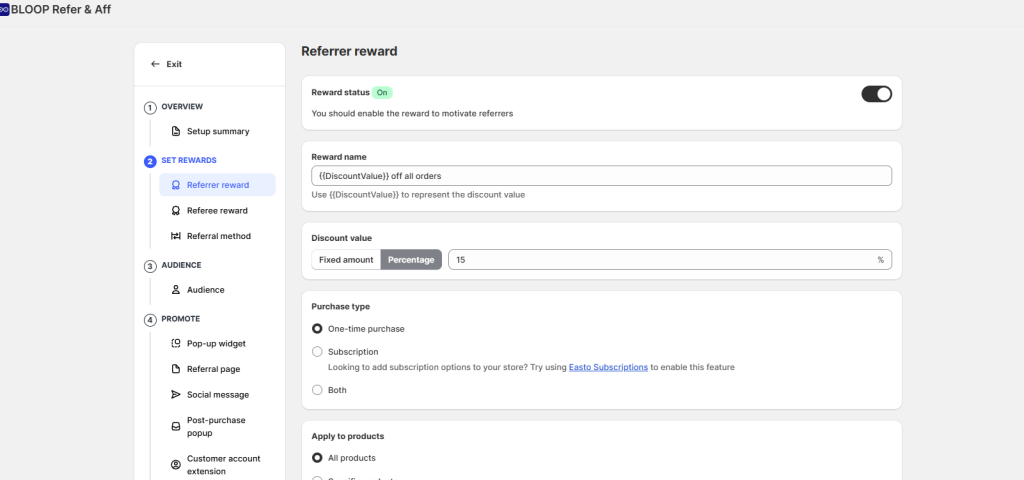
Step 1. Install And Configure Bloop
Install the Bloop app from the Shopify App Store and connect it to your store with one click. Complete the onboarding wizard that walks you through essential settings like default reward types (store credit, coupons, or custom), fraud-prevention settings, and branding. The entire setup typically takes 10-15 minutes.
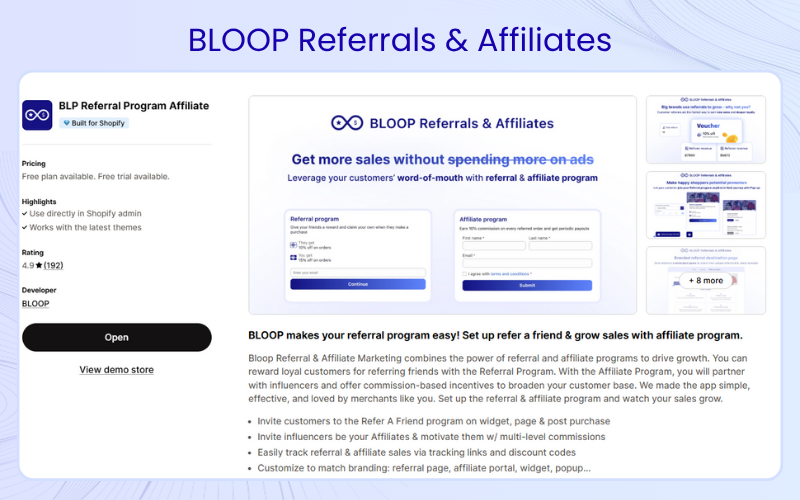
Step 2. Create Reward Rules
Set up reward logic for each incentive by defining who can refer, minimum order value requirements, and geographic regions. Choose one-sided rewards (referrer only) or double-sided rewards (both parties), then automate distribution through store credit, coupon codes, or gift cards with clear expiration dates and usage limits. You can create multiple reward tiers based on customer segments or referral milestones.
Step 3. Launch Multi-Channel Promotion
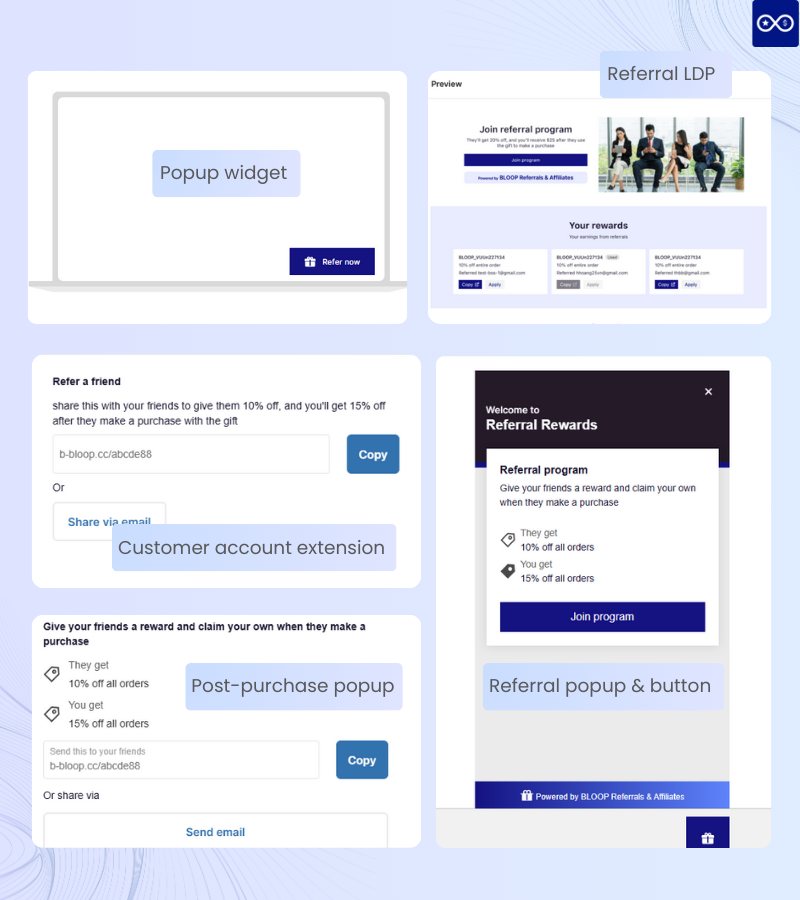
Promote your program via referral widgets like on-site banners, post-purchase thank-you pages, email flows, SMS campaigns, and social media. Add referral calls-to-action to your website header, customer account page, and order confirmation emails. Most successful programs see 60-70% of referrals coming from email and post-purchase promotions since customers are already in a positive mindset after buying.
Key promotion channels to prioritize:
- Post-purchase pages: Catch customers right after they buy when satisfaction is highest
- Email campaigns: Reach existing customers with dedicated referral announcements
- Account dashboard: Make referral links easily accessible for repeat visitors
- Social media: Amplify reach through your existing followers and brand advocates
>>> Explore: How to promote your referral program?
Get started free and launch your referral program in under 15 minutes with Bloop’s guided setup.
Metrics To Track And Optimize Performance
Monitor these KPIs to confirm your referral gifts are profitable and scalable.
Referral Conversion Rate
Track the percentage of referral links that lead to purchases to gauge gift appeal and program effectiveness. A healthy referral conversion rate typically falls between 8-15% for eCommerce, though this varies by industry and average order value. If you’re seeing rates below 5%, your reward might not be compelling enough or your referral messaging needs clarification.
Average Order Value Lift
Compare AOV from referred customers versus organic customers to assess traffic quality. Referred customers often spend more than average since they arrive with social proof and trust already established. If your referred AOV is lower than organic, you might be attracting bargain hunters rather than qualified buyers.
Cost Per Referral
Divide total program costs (rewards paid plus app fees plus promotional expenses) by successful referrals to ensure profitability. Your cost per referral ideally sits 40-60% below your standard CAC to justify the program’s existence. Track this monthly and adjust reward values if costs creep too high.
Repeat Purchase Rate
Measure how often referred customers buy again within 90 days to validate long-term value. Referred customers typically show higher repeat purchase rates than paid acquisition channels since they arrive through trusted recommendations. If repeat rates are low, focus on post-purchase experience improvements.
Turn Referrals Into Scalable Growth With Bloop
Bloop streamlines referral setup, reward automation, and fraud prevention without requiring any coding knowledge. It integrates seamlessly with Shopify and popular loyalty tools like Smile.io and LoyaltyLion, making it easy to launch, track, and optimize programs without juggling multiple platforms. Over 2,000 Shopify merchants trust Bloop to manage their referral and affiliate programs.
>>> Get started free on the Shopify App Store and turn referrals into reliable, profitable growth.
Frequently Asked Questions About Shopify Referral Gifts
Can referral gifts integrate with loyalty programs?
Yes, most referral apps integrate with loyalty systems so customers can stack benefits. This integration means a customer could earn loyalty points from their purchase and referral credits simultaneously, maximizing their total rewards.
What if my products have low margins?
Prioritize non-monetary rewards like early access, exclusive content, recognition, or community perks that deliver value without cutting into profits. Digital rewards, social shoutouts, and VIP experiences cost almost nothing to fulfill while still feeling valuable.
Do physical gifts cause shipping issues for global referrals?
Digital rewards eliminate shipping complexity and cost entirely, while store credit keeps fulfillment simple. If you do offer physical rewards, consider regional alternatives (digital for international, physical for domestic) or partner with local fulfillment services.
How many reward variations should I test simultaneously?
Start with two to three different reward types to gather clean data without overwhelming your audience. Run each variation for at least 30 days or 100 referrals (whichever comes first) to collect meaningful results, then double down on the top performer.

Hien Tran
Hien Tran is a Product Marketing specialist at Bloop, where she translates product features into growth-driven solutions for Shopify merchants. By combining market insights with clear messaging, Hien ensures that store owners not only understand Bloop’s value but also know how to apply it to boost revenue, loyalty, and customer acquisition.