The Ultimate Guide to Multi-Step Referral Rewards For Shopify stores
Multi-step referral programs reward customers progressively as their referred friends complete multiple actions, like signing up, making a first purchase, and becoming repeat buyers. Unlike traditional single-reward programs that pay out once, multi-step systems create sustained engagement by offering incremental incentives at each milestone.
For Shopify merchants, this approach transforms casual referrers into active advocates. Instead of earning a one-time $10 discount, your customers might receive $5 when their friend signs up, another $10 when that friend makes their first purchase, and $15 more when they become a repeat customer. This structure keeps advocates engaged longer and naturally filters for higher-quality referrals.
This guide walks you through everything you need to build, launch, and optimize a multi-step referral program that drives measurable growth for your store.
What Are Multi-Step Referral Rewards?
Definition and Key Concepts
Multi-step referral rewards are structured incentive programs that distribute rewards across multiple conversion milestones rather than a single action. Each step corresponds to a specific behavior you want to encourage, creating a reward ladder that motivates continued participation.
Here’s how a typical three-step program works:
Step 1: Friend clicks referral link and signs up (Advocate earns $5 credit)
Step 2: Friend completes first purchase (Advocate earns $15 credit)
Step 3: Friend makes second purchase within 60 days (Advocate earns $20 credit)
The program tracks each referred customer’s journey and automatically triggers rewards as they hit each milestone. This creates multiple touchpoints where advocates feel appreciated and stay invested in their referrals’ success.
Common milestone types include:
- Account creation or email signup
- First purchase completion
- Reaching a minimum order value
- Making repeat purchases within a timeframe
- Subscription activation or renewal
- Specific product category purchases
The key difference from traditional programs is that rewards are conditional and cumulative. Your advocates don’t receive the full benefit immediately, which naturally encourages them to follow up with friends and ensure they complete valuable actions.
How They Differ from Single-Step Rewards
Single-step programs deliver all rewards immediately after one action, typically when a referred friend makes their first purchase. Both the advocate and friend receive their incentives, and the transaction ends.
Single-step example:
Sarah refers Tom → Tom makes first purchase → Sarah gets $10, Tom gets $10 → Program ends
Multi-step example:
Sarah refers Tom → Tom signs up (Sarah gets $5) → Tom makes first purchase (Sarah gets $10, Tom gets $10) → Tom makes second purchase (Sarah gets $15) → Program continues
The multi-step approach offers several distinct advantages:
- Higher total reward value without increased risk: You can offer $30 in total rewards across three steps while only paying $5 upfront, compared to committing $20 immediately in a single-step program. You only pay the full amount when customers prove their value through repeat purchases.
- Better referral quality: When advocates know they’ll earn more from customers who stick around, they naturally refer people more likely to become loyal customers rather than one-time bargain hunters.
- Extended engagement period: Single-step programs create a spike in referral activity that quickly drops off. Multi-step programs keep advocates checking back to see if their referrals have progressed, maintaining momentum over weeks or months.
- Lower customer acquisition cost: You’re distributing rewards based on actual customer lifetime value rather than speculative first-purchase value. A customer who completes all three steps might generate $300 in revenue while you paid $30 in rewards (10% CAC), compared to paying $20 upfront for a customer who only spends $40 (50% CAC).
- Reduced fraud risk: Multi-step requirements make it harder for bad actors to game the system since they’d need to complete multiple authenticated actions over time rather than just one quick transaction.
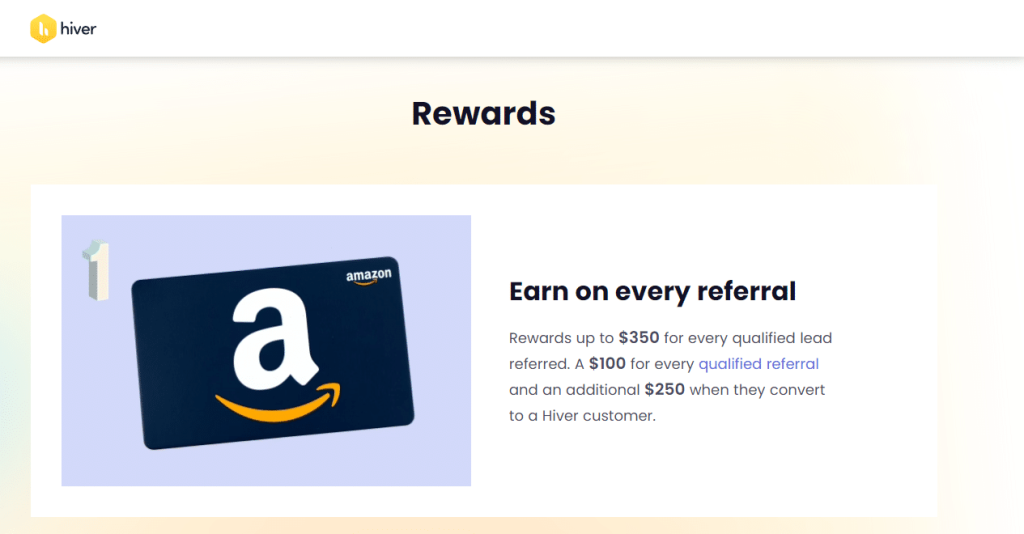
The tradeoff is complexity. Multi-step programs require more sophisticated tracking, clearer communication about reward structures, and more patience from advocates who wait for full payouts.
Why Use Multi-Step Referral Rewards?
Benefits for Shopify Merchants
Multi-step referral programs align your reward spending directly with customer value, creating a performance-based acquisition channel that scales profitably.
- Increased customer acquisition with controlled costs: Traditional advertising requires upfront payment regardless of results. Multi-step referrals let you pay progressively as customers prove their worth. If someone signs up but never purchases, you’ve only paid the small first-step reward instead of the full amount.
- Higher customer lifetime value (CLV): Customers acquired through multi-step referrals show 25-30% higher retention rates compared to single-step programs, according to referral program data from major e-commerce platforms. The progressive reward structure naturally selects for customers more likely to make repeat purchases.
- Improved average order value: You can structure reward steps around order value thresholds. For example, offering bonus rewards when referred customers spend over $100 encourages advocates to refer friends they know will make substantial purchases.
- Better advocate retention: Single-step programs see 60-70% of advocates make just one referral and stop. Multi-step programs keep advocates engaged longer because they’re tracking multiple friends through various stages, creating ongoing reasons to check their dashboard and make additional referrals.
- Predictable unit economics: You can model exactly how much you’ll spend on rewards based on historical conversion rates at each step. If 100 signups typically convert to 60 first purchases and 35 second purchases, you know your total reward cost per cohort before spending a dollar.
- Stronger word-of-mouth quality: Advocates become more invested in their referrals’ success when their own rewards depend on it. This often leads to more personal follow-ups, better product recommendations, and genuine enthusiasm rather than spam-like sharing.
Ideal Use Cases for Complex Sales Cycles
Multi-step referral programs work best when customer value unfolds over time rather than in a single transaction.
- Subscription-based products: Monthly subscription boxes, software tools, or membership programs benefit enormously from multi-step rewards. You might reward advocates when friends start a trial, convert to paid, and reach their third renewal. This ensures you’re only paying full rewards for customers who generate recurring revenue.
- High-consideration purchases: Products requiring research and deliberation, like furniture, electronics, or specialized equipment, naturally fit multi-step structures. Reward the initial consultation booking, first purchase, and subsequent purchases as customers outfit their space or upgrade their setup.
- Consumable products with repeat purchase cycles: Coffee, supplements, skincare, or pet food stores should reward both the first purchase and subsequent reorders. This encourages advocates to refer customers likely to become regular buyers rather than one-time samplers.
- Multi-product catalogs: Fashion retailers, home goods stores, or general merchandise shops can structure steps around product categories. Reward when referred customers purchase from different categories, encouraging advocates to explain your full product range.
- Higher price point items: When average order values exceed $200, customers take longer to decide and often make multiple purchases over time. Multi-step programs match this natural buying pattern while keeping your acquisition costs proportional to revenue.
- Community-driven brands: Products with strong communities or lifestyle components (fitness, outdoor gear, hobby supplies) benefit from advocates who genuinely want their friends to succeed. Multi-step rewards support this by compensating advocates for ongoing mentorship, not just the initial introduction.
Multi-step programs are less effective for one-time purchases (like wedding services), impulse buys under $30, or products with naturally low repeat purchase rates. In these cases, a well-designed single-step program often performs better.
Steps to Set Up Your Multi-Step Referral Program
Step 1: Define Your Reward Steps
Start by mapping your customer journey and identifying the specific actions that indicate increasing customer value.
Analyze your purchase data. Pull reports showing:
- What percentage of new customers make a second purchase?
- What’s the average time between first and second purchase?
- At what point do customers typically become profitable (after acquisition costs)?
- What order value or product combinations indicate higher lifetime value?
Choose 2-4 meaningful steps. More steps create more complexity without proportional benefits. Three steps work well for most Shopify stores:
Step 1 (Low barrier): Email signup, account creation, or quiz completion
Step 2 (First value): First purchase of any amount
Step 3 (Loyalty indicator): Second purchase, minimum order value, or subscription renewal
Align steps with business goals. If you’re focused on growing your email list, make Step 1 rewards generous. If profitability matters most, weight rewards heavily toward Step 3 when customers have proven their value.
Set realistic timeframes. Each step should have a completion window. If your typical repeat purchase cycle is 45 days, don’t expect Step 3 completion in 30 days. Build in buffer time, perhaps 60-90 days, to account for variation.
Example structure for a skincare brand:
- Step 1: Friend signs up and completes skin quiz (within 7 days of referral)
- Step 2: Friend purchases any product (within 30 days of signup)
- Step 3: Friend makes second purchase of $50+ (within 90 days of first purchase)
Step 2: Decide on Advocate and Friend Rewards
Balance generosity with profitability by calculating the maximum you can afford to spend on rewards while maintaining healthy margins.
Calculate your reward budget. Use this formula:
Maximum total reward = (Average customer lifetime value × Target CAC percentage) ÷ Expected conversion rate
Example: If your CLV is $300, you’re willing to spend 20% on acquisition ($60), and 50% of referred friends complete all steps, you can offer up to $120 in total rewards ($60 ÷ 0.5).
Split between advocate and friend rewards. Most successful programs allocate 60-70% of total rewards to advocates since they’re doing the work. However, friend rewards are crucial for conversion, especially at Step 2.
Example reward distribution (total budget: $40):
- Step 1: Advocate $5 / Friend $0
- Step 2: Advocate $10 / Friend $10
- Step 3: Advocate $15 / Friend $0
- Total: Advocate $30 / Friend $10
Choose reward types that drive behavior:
- Percentage discounts work well for variable order values (20% off encourages larger purchases)
- Fixed dollar amounts provide clarity and work for consistent price points ($15 off)
- Store credit keeps revenue in your ecosystem and often leads to overspend
- Free products move inventory and introduce customers to new items
- Cash/PayPal appeals to affiliate-style advocates but costs you more
Consider asymmetric rewards. You don’t need to reward both parties at every step. Many programs reward only advocates at Steps 1 and 3 (signup and repeat purchase) while rewarding both at Step 2 (first purchase) to maximize conversion.
Test different reward levels. Start conservative and increase rewards if your program underperforms. It’s easier to raise rewards than lower them without disappointing existing advocates.
Step 3: Choose the Right Referral Software
Your referral software needs to handle multi-step tracking, conditional rewards, and automated payouts without manual intervention.
Essential features for multi-step programs:
- Milestone tracking: Automatically detect and record when referred customers complete each step
- Conditional logic: Trigger different rewards based on order value, product type, or timeframes
- Fraud prevention: Identify suspicious patterns like self-referrals or fake accounts
- Automated notifications: Alert advocates when their referrals progress to new steps
- Dashboard visibility: Let advocates track their referrals’ status in real time
- Flexible reward types: Support discounts, credits, cash, or custom rewards
- Expiration rules: Set time limits for step completion
Integration requirements:
Your referral software must integrate seamlessly with your Shopify store to track customer actions accurately. Look for native Shopify apps that automatically sync customer data, orders, and product information without custom coding.
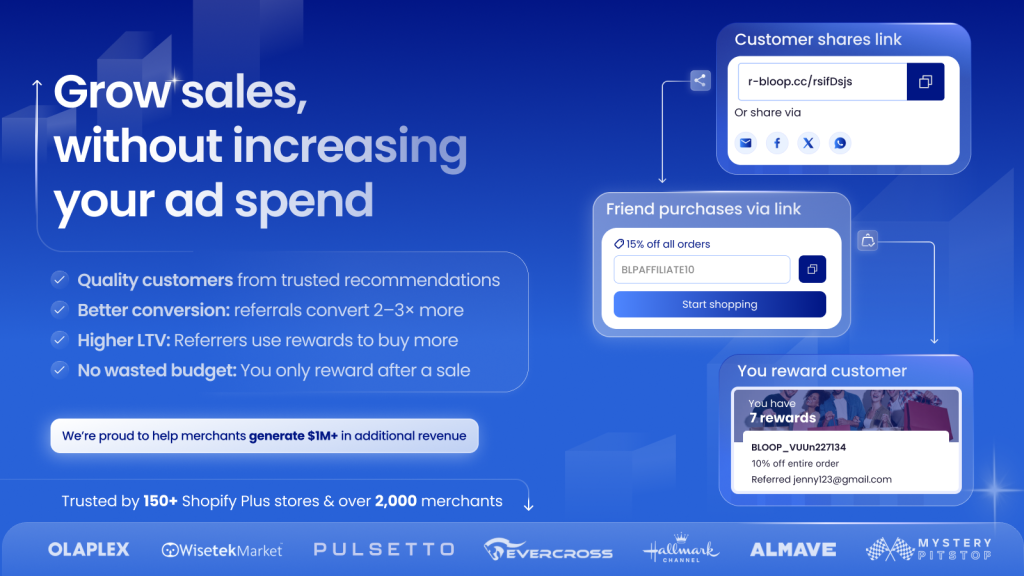
Bloop offers all these capabilities specifically designed for Shopify merchants, with intuitive setup that doesn’t require technical expertise.
Step 4: Configure Conversion Tracking
Accurate tracking ensures advocates get credited correctly and you can measure program performance.
Set up event tracking for each step:
Step 1 events: Account creation, email signup, quiz completion, or landing page visit
Step 2 events: First order placed, payment confirmed, order fulfilled
Step 3 events: Second order placed, subscription activated, minimum spend reached
Define attribution windows. How long after the initial referral click should conversions count? Common windows:
- Step 1: 7-30 days (enough time to decide but not so long that the referral connection weakens)
- Step 2: 30-60 days (first purchase window)
- Step 3: 60-180 days (repeat purchase window)
Test your tracking before launch:
- Create a test referral link
- Complete each step as a referred customer
- Verify rewards trigger correctly at each milestone
- Check that advocate dashboard updates in real time
- Confirm notification emails send appropriately
Monitor these key metrics:
- Referral click-through rate: Percentage of people who click referral links
- Step 1 conversion rate: Clicks that complete first action
- Step 2 conversion rate: Step 1 completions that reach Step 2
- Step 3 conversion rate: Step 2 completions that reach Step 3
- Time between steps: How long each progression takes
- Total reward cost per completed referral: Your actual CAC
- Referred customer LTV: Revenue generated from referred customers
Set up weekly reports tracking these metrics so you can spot problems early and optimize performance.
Step 5: Structure and Automate Your Rewards
Automation ensures rewards distribute accurately without manual processing, saving time and reducing errors.
Configure automatic reward triggers:
Your referral software should automatically issue rewards when customers complete each step. Set up rules like:
- When a referred customer’s first order status changes to “fulfilled,” issue $10 credit to advocate and $10 discount code to customer
- When a referred customer places their second order within 90 days, issue $15 credit to advocate
- When a referred customer’s order exceeds $100, issue bonus $5 credit to advocate
Set up reward delivery methods:
- Discount codes: Generate unique codes automatically and send via email
- Store credit: Add credit directly to customer accounts for use on next purchase
- Gift cards: Issue digital gift cards that work like cash in your store
- External payments: Integrate with PayPal or bank transfer for cash rewards
Create automated notification sequences:
For advocates:
- “Great news! [Friend name] just signed up using your link. You’ve earned $5 credit!”
- “Awesome! [Friend name] made their first purchase. You’ve earned $10 more!”
- “Amazing! [Friend name] is now a repeat customer. You’ve earned $15 more!”
For referred friends:
- Welcome email with their signup reward
- Reminder email if they haven’t completed Step 2 within 14 days
- Congratulations email when they reach Step 3
Build in reward expiration rules:
Store credits should expire after 6-12 months to encourage usage and prevent liability buildup. Clearly communicate expiration dates in all reward notifications.
Create a reward redemption process:
Make it easy for advocates to see their available rewards and use them. Your referral dashboard should show:
- Current available balance
- Pending rewards (referrals in progress)
- Reward history and expiration dates
- One-click redemption or automatic application at checkout
Step 6: Promote Your Program to Customers
Even the best-designed program fails without awareness. You need multiple promotion channels to reach different customer segments.
Email marketing campaigns:
Launch announcement: Send to your entire customer list explaining the new program and how it works. Include specific examples showing total earning potential.
Targeted segments:
- Recent purchasers (within 30 days): High satisfaction, likely to refer
- Repeat customers: Already loyal, understand product value
- High-value customers: Can refer similar high-value friends
Automated triggers:
- Post-purchase email (2-3 days after delivery): “Love your order? Share it with friends and earn $30”
- Repeat customer milestone: “You’re a valued customer! Invite friends to join you”
- Product review request: Include referral CTA alongside review request
On-site promotion:
- Homepage banner: Rotating banner highlighting earning potential
- Post-purchase page: Thank you page with prominent referral invitation
- Account dashboard: Dedicated referral section in customer account area
- Product pages: Subtle referral mention near add-to-cart button
- Exit-intent popup: Offer referral opportunity to leaving visitors
Social media strategy:
- Organic posts: Share customer success stories, explain program benefits, show reward examples
- Stories and Reels: Quick tutorials on how to refer and earn
- Advocate spotlights: Feature top referrers (with permission) to inspire others
- Social proof: Share statistics like “Our customers have earned $50,000 in rewards this year”
In-package materials:
Include printed referral cards in shipped orders with:
- Simple explanation of the program
- Unique QR code linking to customer’s personal referral page
- Visual showing total earning potential
- Testimonial from another advocate
Customer service integration: Train support team to mention referral program when:
- Customers express satisfaction with products
- Resolving issues successfully (turn happy resolution into referral opportunity)
- Customers ask about discounts or deals
Influencer and affiliate partnerships: Your existing affiliates can promote your referral program to their audiences, creating a multiplier effect where their followers become advocates who refer their own networks.
>> See more: How To Promote a Referral Program For Your Shopify Stores?
In conclusion, a well-built multi-step referral rewards system doesn’t just increase referrals—it sustains them. By giving customers clear milestones and meaningful incentives, you turn casual fans into long-term advocates. Start small, test your tiers, and refine as you go. With the right structure, your referral program becomes a scalable engine for predictable, high-quality growth.

Hien Tran
Hien Tran is a Product Marketing specialist at Bloop, where she translates product features into growth-driven solutions for Shopify merchants. By combining market insights with clear messaging, Hien ensures that store owners not only understand Bloop’s value but also know how to apply it to boost revenue, loyalty, and customer acquisition.