7 Best Gift Card Referral Program Templates You Can Copy 2026
Gift card referral programs turn your happy customers into a sales force by rewarding them with spendable store credit every time they bring in a new buyer, creating a win-win that feels more like gift-giving than marketing. They outperform traditional discount-based referrals because gift cards carry the psychological weight of real money while keeping customers locked into your brand ecosystem.
This guide breaks down seven ready-to-copy templates with real examples, strategic timing, reward structures, and the exact copy you need to launch each one. You’ll also get fraud prevention tactics, conversion-focused page designs from top Shopify brands, and a step-by-step setup checklist for going live in under an hour.
>> You may also like:
- 12+ Referral Incentives Ideas With Real-world Examples
- Customer Referral Strategy Guide: How to Grow Your Shopify Store in 2026
- Referral Program Best Practices for Shopify Stores (with 10+ Examples and a Free Template)
Why Gift-Card Rewards Drive High-Value Referrals
Gift cards work better than other referral rewards because they balance flexibility with brand loyalty, giving customers something that feels like real money while keeping them connected to your store. When someone sees “$25 Gift Card” in a referral offer, their brain registers it as spendable cash they can use right away, not a discount code they might forget about. This creates faster sharing behavior compared to percentage-off coupons or product-specific deals.
The psychology here is simple: gift cards carry less perceived risk than cash payments, and they let new customers explore your full product catalog instead of being locked into predetermined items. Double-sided programs where both the referrer and their friend receive gift cards can boost participation rates by 30% or more, since everyone walks away with something tangible.
Digital gift cards also auto-deliver through email within seconds of a successful referral, creating instant gratification without any manual work on your end. Shopify’s native gift card system tracks redemption rates, monitors fraud patterns through unique codes, and measures ROI automatically when integrated with referral apps like Bloop.

Core Elements of a Customer Referral Program Template
Every high-converting gift card referral program shares five foundational components that transform casual customers into active promoters. Missing even one of these elements can tank your participation rates, so let’s break down what actually matters.
1. Magnetic Headline and Offer
Your headline communicates the complete value proposition in under eight words, typically following patterns like “Give $20, Get $20” or “Share & Earn $25 Gift Cards.” The best headlines use specific dollar amounts rather than percentages because concrete numbers feel more real and easier to evaluate quickly. Action words like “give,” “earn,” “share,” or “unlock” create urgency while maintaining a friendly tone that encourages participation.
2. Double-Sided Incentive Logic
Single-sided programs where only the referrer gets rewarded feel awkward to share, like you’re asking friends to help you earn a bonus. Double-sided rewards transform the dynamic into genuine gift-giving, you’re offering something valuable to people you care about while earning a thank-you reward yourself. The referee’s reward typically matches or slightly exceeds the referrer’s amount to maximize new customer acquisition, though testing different ratios helps optimize for your specific audience.
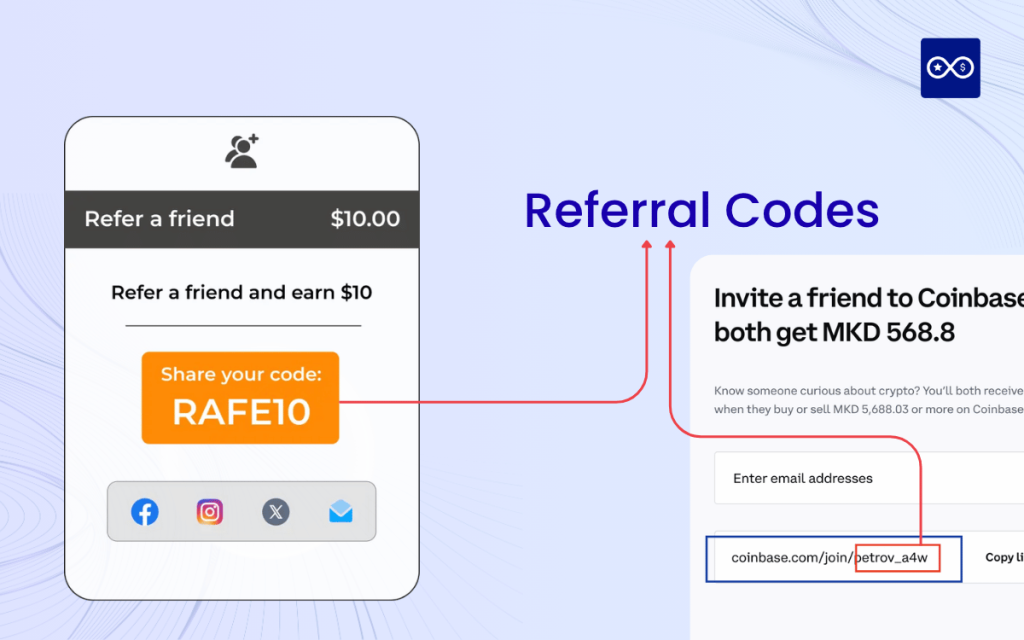
3. Unique Referral Link or Code
Each advocate receives a personalized URL or alphanumeric code that tracks their specific referrals, ensuring proper credit attribution and preventing disputes. Modern referral platforms generate these automatically and embed them in shareable assets like email templates, social media graphics, and SMS messages. The tracking mechanism connects directly to Shopify’s order system, triggering gift card issuance only after validated purchases meet your program rules.
4. Social Proof Section
Displaying participation metrics like “2,847 customers have earned rewards” or featuring testimonials from successful referrers builds credibility and normalizes sharing behavior. People hesitate to be the first to try something new, but when they see others actively participating and benefiting, the psychological barrier drops significantly.
5. Clear CTA and Next-Step Cues
Your call-to-action button copy matters more than you might think, “Get My Referral Link” converts better than generic “Sign Up” because it promises immediate, tangible value. After clicking, users get instant confirmation of what happens next, whether that’s an email arriving with their link, a dashboard appearing with sharing tools, or a popup showing their unique code.
7 Gift Card Referral Program Samples You Can Copy Today
These seven templates represent proven frameworks that work across different customer lifecycle stages, business models, and seasonal opportunities. Each template includes ready-to-adapt copy, strategic timing recommendations, and specific use cases so you can launch quickly.

1. New-Customer Welcome Boost
Send this template 24-48 hours after a customer’s first purchase, when satisfaction is high but they haven’t yet forgotten the buying experience.
Template copy: “Welcome to the [Brand] family! Love your purchase? Share the joy with friends and you’ll both receive a $15 gift card when they make their first order. [Get Your Referral Link]”
Use case: This approach capitalizes on new customer excitement while they’re still telling friends about their discovery organically. The short delay after purchase ensures the product has arrived or been experienced, reducing the risk of sharing before satisfaction is confirmed.
Gift card amount: Start with $10-15 for both parties, roughly 10-15% of your average order value, to make the reward feel meaningful without crushing margins.
2. Post-Purchase Thank-You Push
Embed this message directly on order confirmation pages or in the first transactional email customers receive after buying.
Template copy: “Thanks for your order! Know someone who’d love [product category]? Give them $20 off their first purchase and earn a $20 gift card for yourself. [Start Sharing Now]”
Use case: You’re catching customers at their absolute peak satisfaction moment, right after they’ve committed money to your brand. Confirmation page placements see higher engagement than follow-up emails sent days later because the positive emotion is immediate and intense.
Gift card amount: Match or slightly exceed the average discount you’d offer new customers anyway, typically $15-25, since you’re essentially paying for acquisition through your existing customer base rather than ad platforms.
3. Holiday Gifting Sprint
Launch this campaign 4-6 weeks before major gifting holidays like Christmas, Mother’s Day, or Valentine’s Day when people actively search for presents.
Template copy: “Give the perfect gift this [holiday]! Share [Brand] with friends and family, they’ll get $25 to shop our collection, and you’ll earn a $25 gift card for every purchase they make. [Share Your Holiday Link]”
Use case: Seasonal campaigns leverage natural gifting behavior and higher purchase intent, making referrals feel helpful rather than salesy. The extended timeline before the holiday creates urgency while giving enough runway for multiple sharing touchpoints.
Gift card amount: Increase rewards by 25-50% during peak seasons since customer lifetime value and order sizes typically jump during holidays, justifying the higher acquisition cost.
4. VIP Tier Upgrade
Restrict this template to your top 10-20% of customers by purchase frequency or total spend, delivering it through exclusive email segments or loyalty program dashboards.
Template copy: “As a VIP member, you’ve unlocked our premium referral rewards! Introduce friends to [Brand] and earn $30 gift cards per successful referral, while they receive $25 off their first order. [Access Your VIP Referral Portal]”
Use case: Your best customers already love your brand enough to buy repeatedly, making them ideal advocates who carry genuine enthusiasm and credibility. The enhanced reward acknowledges their status while motivating them to tap into their networks, which often contain similar high-value potential customers.
Gift card amount: Offer 20-30% higher rewards than standard programs, typically $25-40, since VIP referrals often convert at higher rates and generate customers with above-average lifetime value.
5. Product-Launch Waitlist
Deploy this template 2-4 weeks before launching a new product, collection, or service to build pre-launch momentum and gauge demand.
Template copy: “Be first to access our upcoming [product name]! Join the waitlist and refer friends to move up the line, every successful referral earns you a $20 gift card plus guaranteed early access. [Join & Share Now]”
Use case: Waitlist referral programs create artificial scarcity and social proof simultaneously, as each share validates demand while expanding your potential customer base. The early access component appeals to status-seeking behavior, making the gift card feel like a bonus on top of the real prize.
Gift card amount: Set rewards at $15-25 since the primary incentive is early access, with the gift card serving as a tangible thank-you that ensures participants feel properly compensated.
6. Milestone Sharing Ladder
Structure this as an ongoing program with clear tiers visible in a referral dashboard, celebrating achievements as advocates progress.
Template copy: “Level up your rewards! Refer 1 friend, earn $15. Refer 3 friends, earn $50 total. Refer 5 friends, earn $100 total plus exclusive perks. [Track Your Progress]”
Use case: Gamification through progressive rewards motivates power users to push beyond a single referral, targeting the small percentage of customers who drive the majority of referral volume. The visible ladder creates clear goals and a sense of achievement, transforming referral sharing from a one-time action into an engaging challenge.
Gift card amount: Design escalating rewards that increase per-referral value at each tier, like $15, $20, then $25 per successful referral, so the marginal benefit of the next share always exceeds the last.
7. Win-Back Reactivation Hook
Send this template to customers who haven’t purchased in 90-180 days, timing it to coincide with new product launches or seasonal collections.
Template copy: “We miss you! Come back and share [Brand] with a friend, you’ll both receive $25 gift cards to rediscover what you love. No purchase required to refer. [Reactivate & Earn]”
Use case: Dormant customers often disengage because they’ve found alternatives or simply forgot about you, not because they had a bad experience. Inviting them back as advocates rather than buyers removes pressure while giving them a low-stakes way to re-engage with your brand.
Gift card amount: Offer compelling amounts of $20-30 to overcome the inertia of disengagement, treating this as a reactivation cost that’s typically cheaper than acquiring entirely new customers.
Referral Page Examples That Convert on Shopify
Real-world referral pages from successful Shopify brands reveal patterns in design, copy, and user experience that consistently drive shares and conversions. Studying examples from brands like Allbirds, Glossier, and Bombas helps you avoid common pitfalls while adopting proven elements.
Allbirds’ one-pager strips away all unnecessary elements, featuring a single headline (“Give $15 Off. Get $15 Off.”), a brief two-sentence explanation, and one prominent CTA button above the fold. The minimalist design mirrors their brand aesthetic while eliminating decision paralysis, visitors immediately understand the offer and know exactly what action to take. Their mobile layout stacks vertically with thumb-friendly button placement, recognizing that most referral shares happen on smartphones.

Glossier’s modal pop-up triggers when customers complete a purchase or visit their account dashboard, overlaying the main site with a focused sharing interface. The popup includes pre-written social media captions, Instagram Story templates, and email copy that advocates can customize, reducing the creative burden that often prevents sharing. By integrating directly with social platforms through native share APIs, they eliminate the friction of copying links and switching apps.

Bombas’ post-purchase widget embeds directly on order confirmation pages, positioned below shipping details but above related product recommendations. The widget displays the customer’s unique referral link with a one-click copy button, plus quick-share icons for email, Facebook, and Twitter that open pre-populated messages. Their genius move is connecting the referral program to their charitable mission, noting that referred purchases help donate even more socks to homeless shelters.

Anti-Fraud Rules and KPI Tracking for Gift-Card Rewards
Gift card referral programs attract fraudsters who create fake accounts, self-refer, or exploit loopholes to generate free rewards without driving real customer acquisition. Implementing smart safeguards from day one protects your margins while tracking the right metrics ensures you’re actually growing profitably.
1. Email and Order Validation Filters
Require email verification before issuing referral links, preventing bulk fake account creation through temporary email services. The referee’s first order also meets validation criteria like a confirmed shipping address, completed payment, and no immediate cancellation or return within 7-14 days. Bloop’s fraud detection automatically flags suspicious patterns like multiple referrals from the same IP address, identical shipping addresses, or unusually high referral volumes from single advocates.
2. Minimum Purchase Thresholds
Set a minimum order value for referee purchases to qualify for rewards, typically matching or slightly exceeding your average order value to ensure quality customers. For example, if your AOV is $75, requiring a $60 first purchase filters out people only interested in maximizing the gift card discount without genuine interest in your products.
3. Top KPIs: Share-to-Purchase Rate, CAC, ROI
Track your share-to-purchase conversion rate (successful referrals divided by total shares) to measure how well your program attracts qualified leads. Calculate customer acquisition cost by dividing total gift card rewards issued by the number of new customers acquired through referrals, comparing this to your paid advertising CAC to validate ROI. Monitor gift card redemption rates since unredeemed cards represent sunk costs, while redemption timing reveals how quickly new customers return for second purchases.
| Metric | What It Measures | Target Range |
| Share Rate | Percentage of customers who share referral links | 15-25% |
| Conversion Rate | Referrals that become paying customers | 5-15% |
| Gift Card Redemption | Rewards actually claimed and used | 80-95% |
Quick Start Checklist for Launching on Bloop
Shopify merchants can launch a fully functional gift card referral program in under an hour using Bloop’s purpose-built platform. This checklist walks you through the essential setup steps to go from installation to your first referral shares.
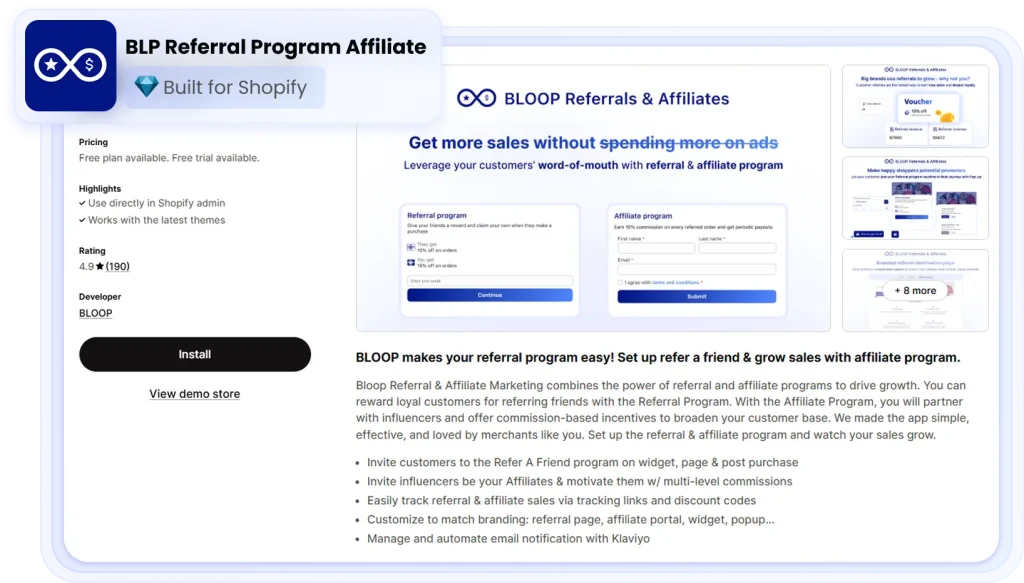
1. Install Bloop and Connect Shopify Gift-Card Product
Download Bloop from the Shopify App Store and complete the one-click installation that automatically connects to your store’s order and customer data. Navigate to Bloop’s dashboard and link your existing Shopify gift card product, or create a new one specifically for referral rewards with customizable denominations. The integration takes about five minutes and requires no coding or theme modifications.
2. Configure Double-Sided Reward Tiers
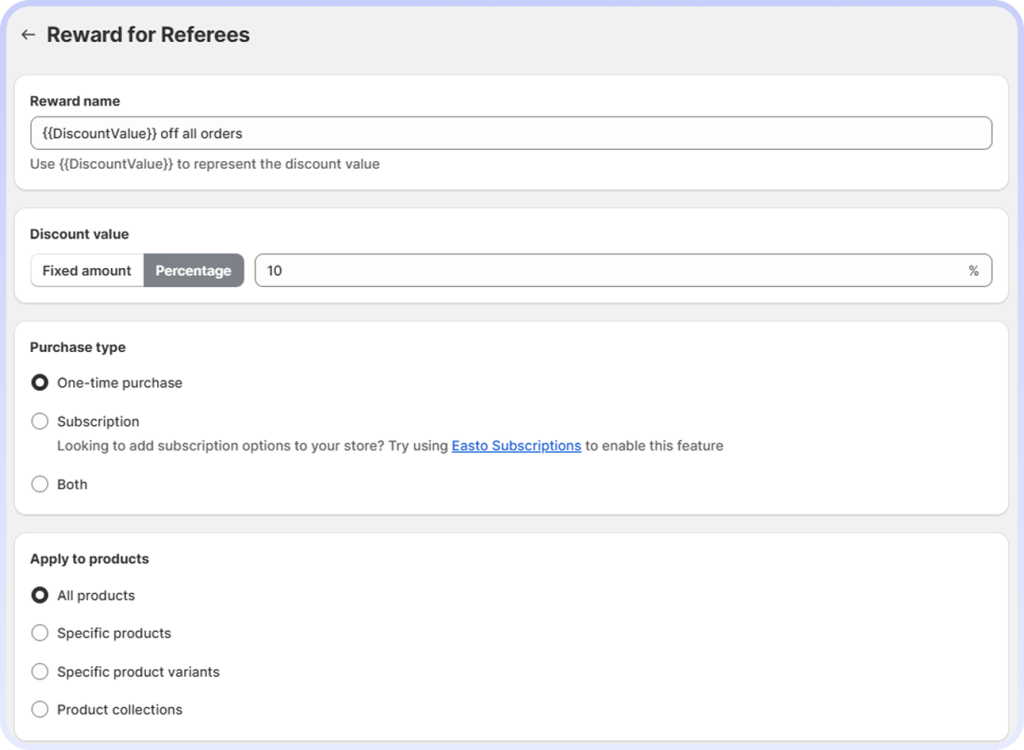
Set your referrer and referee gift card amounts based on your average order value and target profit margins, testing different combinations to find the sweet spot between generous-feeling rewards and sustainable economics. Configure any advanced rules like minimum purchase thresholds ($50 first order), referral limits per customer (5 successful referrals per month), or time restrictions (rewards expire after 90 days).
3. Enable Fraud-Protection Rules and Go Live
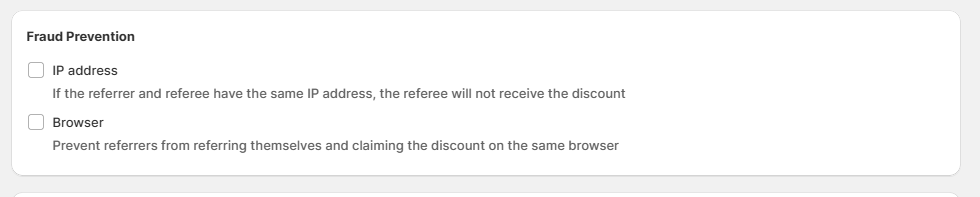
Activate Bloop’s built-in fraud prevention features including email verification requirements, IP address monitoring, and duplicate order detection that automatically flags suspicious activity. Customize your referral page design using Bloop’s visual editor, adding your brand colors, logo, and custom copy that matches your voice. Launch with a soft rollout to your email list or VIP customers first, gathering feedback and monitoring performance for 1-2 weeks before promoting the program site-wide.
Get started free with Bloop’s referral program and launch your gift card campaign in minutes.
FAQs About Gift Card Referral Programs
How do I decide the right gift-card amount for referrals?
Start with 10-15% of your average order value for both referrer and referee rewards, ensuring the amount feels meaningful without eroding profit margins on that critical first purchase. Test higher amounts if your customer lifetime value and repeat purchase rates justify increased acquisition costs. Monitor your referral-to-purchase conversion rate closely, if it’s below 5%, your reward might be too low to motivate action.
Can I offer gift cards as part of a referral program automatically?
Absolutely. Most Shopify referral apps like BLOOP let you automate gift-card rewards end-to-end. Once a referred customer completes a qualifying purchase, the system can generate and issue gift cards instantly without any manual work.
Which gift card marketplaces offer bonus rewards for referrals?
A few major gift-card platforms run referral or “invite a friend” bonuses, though the structure varies by region:
- Raise – Offers credits when you refer new buyers who make their first purchase.
- Rakuten (formerly Ebates) – Not a pure gift-card marketplace, but rewards users with cash bonuses that can be redeemed as gift cards; strong referral program.
- Swagbucks – Gives points for referring friends; points can be exchanged for gift cards from hundreds of brands.
- Honey – Provides referral bonuses that can be redeemed as gift cards through Honey Gold.
- Ibotta – Users earn referral bonuses that can be cashed out as gift cards.
Can I stack gift-card rewards with other discounts and promotions?
Most successful programs allow stacking to maximize appeal and remove friction, letting referees combine their gift card with site-wide sales or first-time customer discounts. However, set clear terms about which promotions combine, typically excluding major events like Black Friday or clearance sales where margins are already compressed.
What happens if a referral order gets returned or cancelled?
Implement a policy requiring completed purchases to remain valid for 14-30 days before gift card issuance, giving you a buffer to catch returns, cancellations, or fraudulent orders. If you’ve already issued rewards and an order gets reversed, most platforms including Bloop support automated clawback features that void unused gift cards or deduct the value from the advocate’s account balance.
Scale Word-of-Mouth Growth With Bloop’s Free Trial
Bloop transforms referral program management from a complex project into a simple, automated growth channel that Shopify merchants can launch in minutes. The platform combines customizable gift card rewards, fraud prevention, performance analytics, and seamless Shopify integration in one affordable dashboard.
Over 2,000 Shopify merchants trust Bloop to manage their referral and affiliate programs, with 190+ five-star ratings on the Shopify App Store reflecting its combination of powerful features and genuine ease of use. Whether you’re launching your first referral program or migrating from a clunky legacy system, Bloop’s free trial lets you test every feature risk-free.

Hien Tran
Hien Tran is a Product Marketing specialist at Bloop, where she translates product features into growth-driven solutions for Shopify merchants. By combining market insights with clear messaging, Hien ensures that store owners not only understand Bloop’s value but also know how to apply it to boost revenue, loyalty, and customer acquisition.